


Find Your Perfect Wood Product
If you find a product you like, reach out to us for more details and assistance.
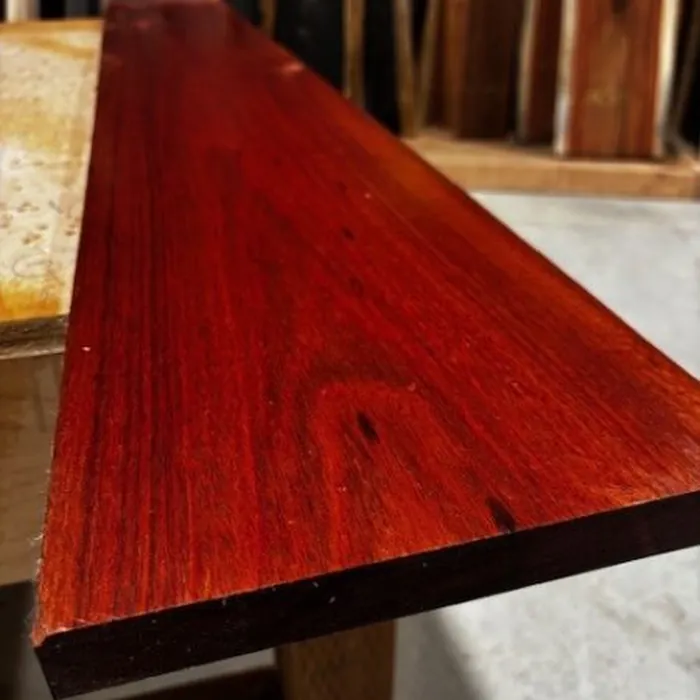
Bloodwood
Bloodwood’s natural, vivid crimson glows and is more spectacular under a clear finish. Its tight grain and subtle chatoyance create a silky, glass-like surface perfect for statement boxes, instrument accents, fine furniture details, and turned gifts. The color pairs beautifully with light inlays and metal hardware, making small projects look truly premium.
Specifications:
- Common Name(s): Bloodwood, Cardinalwood, Satine
- Scientific Name: Brosimum rubescens
- Distribution: Tropical South America.
- Tree Size: 4-7 ft (1.2-2.1 m) trunk diameter, 80-150 ft (25-45 m) tall
- Average Dried Weight: 050 kg/m3), 66 lbs/ft3 (1
- Janka Hardness: 2, 900 lbf (12, 900 N)
- Crushing Strength: 14, 310 lbf/in2 (98.7 MPa)
Grain/Texture:
Grain: Straight or slightly interlocked.
Texture: fine texture with good natural luster, and is also somewhat chatoyant.
Texture: fine texture with good natural luster, and is also somewhat chatoyant.
Rot Resistance:
Bloodwood is rated as very durable, and resistant to most insect attacks.
Workability:
It's extremely dense, and has a pronounced blunting effect on cutters. The wood tends to be brittle and can splinter easily while being worked. Those persistent enough to bear with the difficulties of working with Bloodwood to the finishing stage are rewarded with an exceptional and lustrous red surface.
Common Uses:
- Fine / High-End Furniture
- Decorative Pieces
- Specialty Wood Items
- Musical Instruments
- Turned Objects
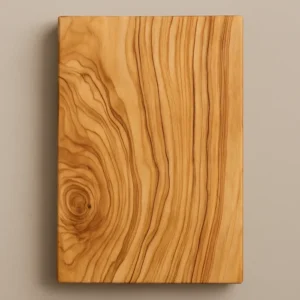
Traditionally known by the name Satine, it’s no wonder that the wood (now more commonly called Bloodwood) has grown so popular as an imported wood species. Though it poses some challenges in working characteristics, its hardness, strength, and coloration make this a crimson favorite. If you're looking for lumber with a slightly lighter tone checkout our Padauk.