


Find Your Perfect Wood Product
If you find a product you like, reach out to us for more details and assistance.
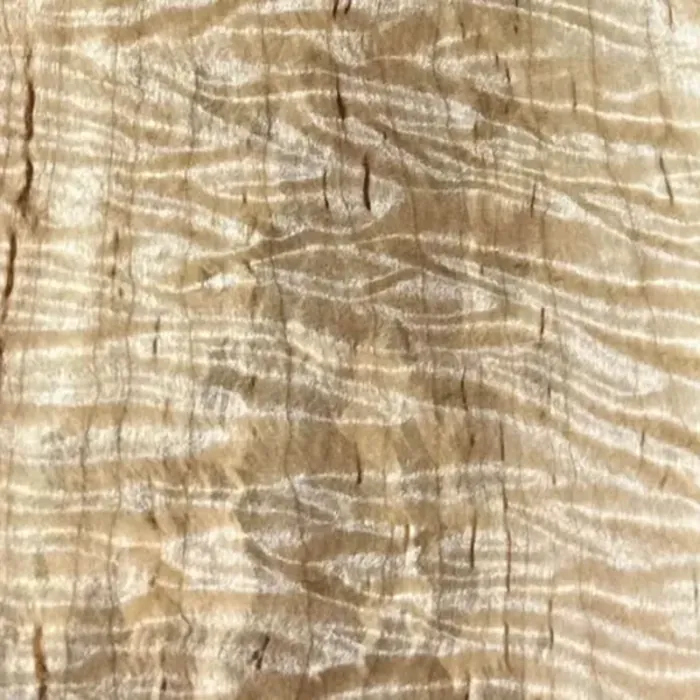
Figured & Fiddleback Maple
Figured Maple resembles Hard Maple being closed-grained but much softer. It is easily worked and generally turns and planes well. It does not require fillers to achieve a glass smooth finish. The curls appearing across the board are the result of contortions in the grain that reflect light at different angles.
Specifications:
- Common Name(s): Figured Maple
- Scientific Name: Acer saccharum
- Distribution: Northeastern North America.
- Tree Size: 2–3 ft (0.6–1.0 m) trunk diameter, 80–115 ft (25–35 m)
- Average Dried Weight: 44.0 lbs/ft³ (705 kg/m³)
- Janka Hardness: 1, 450 lbf (6, 450 N)
- Crushing Strength: 7, 830 lbf/in² (54.0 MPa)
Grain/Texture:
Grain: Generally straight, may be wavy in figured boards.
Texture: Fine, even texture with moderate natural luster.
Texture: Fine, even texture with moderate natural luster.
Rot Resistance:
Rated as non-durable to perishable; susceptible to insect attack.
Workability:
Easy to work with hand/machine tools. Can burn with high-speed cutters. Turns, glues, and finishes well; pre-conditioner or gel stain may be needed to avoid blotching.
Common Uses:
- Veneer
- Specialty Wood Items
- Musical Instruments
- Kitchen Utensils
- Turned Objects
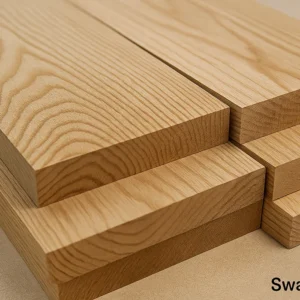
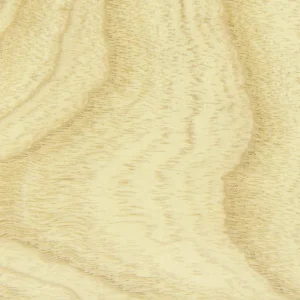
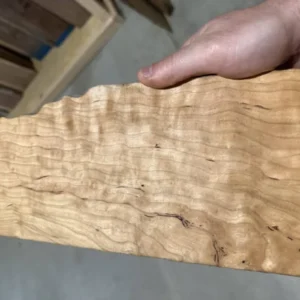
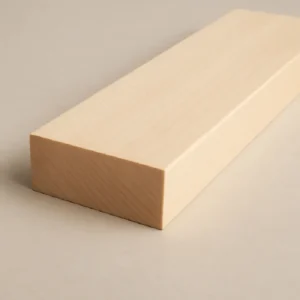
Called curly maple for its 3D grain ripple effect. Also known as fiddleback maple—used in violins for its tight, uniform curls, usually within ¼" spacing and at right angles to the grain. Fiddleback curl is prized by luthiers for backs/sides of acoustic guitars, mandolins, and violins. Similar to quilted maple but with horizontal pattern. Most pronounced when quartersawn; less visible in flatsawn boards. The environmental factors causing this figuring are still unclear