

Even though we run a hardwood lumber store in the Pacific Northwest, a surprising amount of what we stock are Eastern hardwoods that have already taken a long road trip by the time it hits our racks. A lot of our best boards started life way out east—Northern and Appalachian hardwood country—where cold winters, longer rotations between harvests, and old-school sawmill culture all show up in the grain. That’s not just a story well tell, but one that’s written in the grain.
Part of this is personal for me. I grew up with Midwestern trees and fence lines in Iowa, and my business partner Matt G. grew up with hardwood hollers and backroads in Kentucky. Those landscapes get under your skin. When you’ve spent enough time staring at boards on both sides of the country, you start to see patterns you can’t unsee: the way a Northern maple board flashes almost white in the rack, or how a Southern poplar can look like somebody painted it with army camo and highlighter pens. And if you’re running a shop that’s supposed to help customers get predictable results, you lean toward the regions that deliver that kind of consistency.
Why a Pacific Northwest yard leans on Eastern hardwoods
From a woodworker’s point of view, Eastern hardwoods bring three big things to the table: more consistent grain, more predictable color, and a very deep bench of species with known behavior. The big Northern and Appalachian hardwood regions have been managed and milled for a long time, and a lot of the trees there are growing in cooler climates with shorter growing seasons. That often means tighter growth rings and, for species like maple and cherry, a more even, refined look in the finished boards.
That doesn’t mean every tree in the North is perfect and every tree in the South is wild. There are fantastic logs in every region. But if you’re trying to stock a rack where the average board is good—not just the occasional unicorn—the Eastern supply is tough to beat. It’s not just the forest; it’s also the mills, the grading culture, and the fact that generations of people out there have been obsessing over color, clarity, and yield in species like hard maple, cherry, and poplar.
How latitude shows up in hard maple color
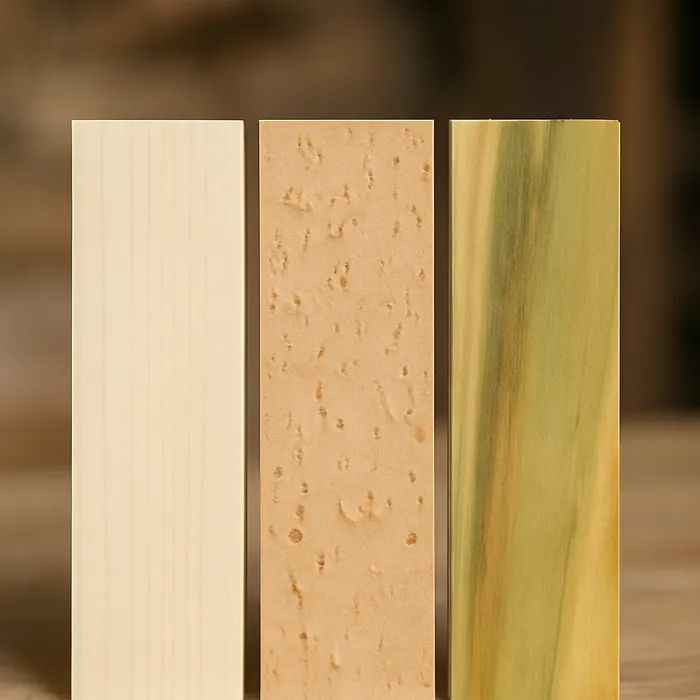
Hard Maple is where the North–South thing really jumps off the page. If you put bundles of hard maple from different regions side by side, you’ll usually see that the Northern stuff runs whiter and cleaner in the sapwood, while maple from farther south tends to pick up more creamy, yellowish tones. A lot of that comes back to climate and soil. Colder winters and shorter growing seasons slow those trees down, tighten up the growth rings, and seem to hold onto that “bright” sapwood a little better. For certain projects—modern kitchens, built-ins, gym floors, anything that wants that clean, light look—that extra whiteness matters. You can’t stain your way into it.
The ground under those trees matters too. Northern maple growing on cooler, well-drained glacial soils is living a different life than maple sitting in heavier, warmer Southern soils with more mineral action going on. You see it in subtle ways: a little more warmth in the color here, a bit more contrast there. Then you layer on when the tree actually comes down. Winter-cut maple that’s yarded and sawn in cold weather tends to stay whiter and more even in color because the logs aren’t sitting in summer heat, cooking and picking up stain. Logs that get felled and left around in July are fighting enzymes, bacteria, and sunshine the whole time. So when we’re buying Eastern hard maple, we’re not just buying “latitude” as a concept; we’re buying all those habits and conditions—the climate, the dirt, the season the sawyers like to cut in, and the way the mills handle and dry the lumber to protect that white sapwood instead of letting it drift toward gray or blotchy.
The magic (and mystery) of Birdseye maple around the Great Lakes
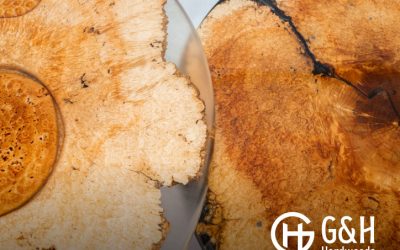
Then you get into the fun stuff: figure. Birdseye Maple is one of those things that sounds like marketing fluff if you’ve never seen it, and then you hold a board in your hands and suddenly you understand why people make entire guitars, dashboards, and heirloom boxes out of the stuff. The grain looks like tiny swirling eyes scattered through the board, breaking up what would otherwise be a pretty straight, polite maple surface.
Here’s the kicker: nobody really knows exactly what causes birdseye figure, and you can’t farm it on purpose. It just shows up in a small percentage of trees. Most of the good, commercial birdseye we see traces back to sugar maple in the Great Lakes region—think Michigan, Ontario, that whole belt of cold, slow-grown northern maple country. When we buy Eastern loads, we’re quietly hoping there’s a little bit of that magic tucked in there. Not because it makes up the bulk of our inventory, but because it lets us do something special for the woodworker who walks in asking for that “crazy figured maple they saw on Instagram.”
From a practical standpoint, birdseye maple works like the rest of the tree. It machines fine, it glues up, it finishes beautifully. The “premium” is all about aesthetics and scarcity. But the reason we’re hunting that lumber in Eastern forests specifically is because that’s where the odds of finding it are actually decent.
Why Southern poplar gets loud with mineral color
Poplar is another species where regional differences jump out, especially if you’re used to boring, pale stuff. Yellow-poplar (what a lot of folks just call “poplar”) already has a pretty wide natural color range. Freshly cut, the sapwood is usually light and creamy, while the heartwood leans yellow-green. On top of that you can get mineral streaks that run blue, gray, purple, or even reddish, depending on the soil and growing conditions.
Down south, where the species grows fast and the soils and climate line up just right, those mineral streaks can get really dramatic. That’s where you get what people call “rainbow poplar”—boards that look like somebody dragged watercolor brushes down the length of the plank. It’s not rare enough to be some mythical creature, but it’s exciting enough that we still pull those boards aside when I see them.
Is that a “flaw” or a feature? Depends who you ask. If you’re building paint-grade cabinets and you want everything to disappear under primer, you go for the calmer, cleaner poplar. If you’re building a statement piece—a bench, a shelf, a table base—that mineral color is free artwork. Either way, we like offering that option. That’s part of why we lean on certain Southern and Appalachian suppliers: they send us both the quiet and the loud boards, and we can pick what makes sense for the jobs our customers are actually doing.
What all this means when you’re picking boards in Auburn
So why does any of this matter when you’re standing in our shop in Auburn, trying to pick maple for a set of stair treads or cherry for a dining table? It matters because the story behind the board is already baked into how your project will look twenty years from now. When our species hanger says “hard maple,” that means whiter color and tighter grain on average. You can expect lumber that’s easier to keep light and modern, and easier to match across multiple board projects.
When you see a bunk of poplar in our shop that looks almost too colorful to be real, that lumber is coming out of Southern logs that soaked up minerals in just the right way. When you see a few slabs of birdseye or other figured maple in our racks, those trees came out of that Great Lakes belt—Michigan, Ontario, that whole cold, slow-grown maple country—where the climate and slow growth seem to line up for that kind of figure. That’s the sourcing strategy, not a happy accident—we go back to the regions that put that character in the wood.
Doing our part to be a good partner means knowing where to source the right boards and how they’re going to look and behave in your finished project. If you want dead-white hard maple for a clean, modern kitchen, we’ll steer you toward the right lifts. If you want a wild, mineral-streaked bench that looks like you stole it from a funky Brooklyn loft, we’ll quietly roll out the loud Southern poplar. If you’ve got a special turning or guitar build in mind, we’ll dig out the birdseye.
Eastern hardwoods aren’t “better” in some universal way, but for the kind of work a lot of our customers are doing—furniture, cabinets, stair treads, custom pieces—they hit that sweet spot of character, consistency, and price. That’s why we keep buying them, even though they have to cross a couple thousand miles to get here. And if you ever want to see the difference in person, we’re always happy to walk the rows of lumber and talk through where they came from and what they’ll do for your next project.