


Find Your Perfect Wood Product
If you find a product you like, reach out to us for more details and assistance.
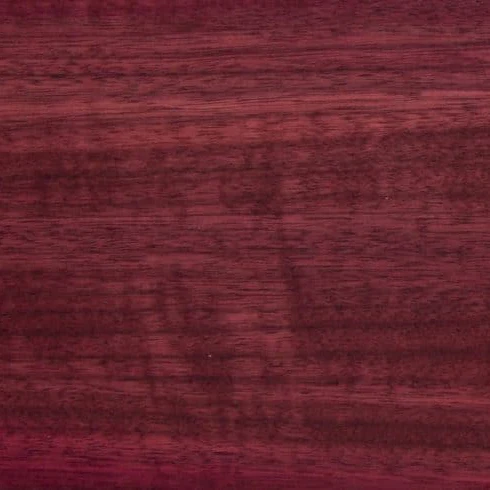
Purpleheart
- Common Name(s): Amaranth, Purpleheart
- Scientific Name: Peltogyne spp.
- Distribution: Central and South America (from Mexico down to southern Brazil).
- Tree Size: 100-170 ft (30-50 m) tall, 3-5 ft (1-1.5 m) trunk diameter
- Average Dried Weight: 56 lbs/ft³ (900 kg/m³)
- Janka Hardness: 2, 200 N), 520 lbf (11
- Crushing Strength: 11, 640 lbf/in² (80.3 MPa)
Texture: Medium texture with a good natural luster.
Rated as very durable and resistant to termite attack.
Purpleheart is a beautiful but demanding hardwood to work, mainly because of its density, hardness, and occasional interlocked grain. It cuts and machines best with very sharp carbide tooling, slow feed rates, and light passes, since dull cutters or excess heat can cause the wood to exude a gummy resin that clogs tools, and planing can produce tearout in difficult grain. For turning, it generally performs well and can leave a smooth surface, but the same rules apply: keep tools sharp and avoid overheating the stock. Gluing is usually rated fair to good, though its density means good surface preparation and firm clamping matter more than with easier woods. Woodworkers should also watch for splitting when nailing or screwing and pre-drill near edges. Overall, purpleheart rewards careful technique with a crisp, polished result, but it is not a species that tolerates dull tools, aggressive machining, or rushed joinery.
- Fine / High-End Furniture
- Veneer
- Specialty Wood Items
- Turned Objects
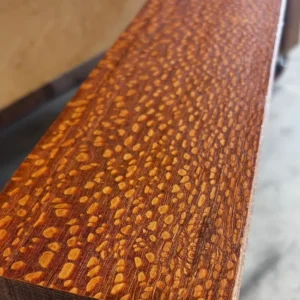
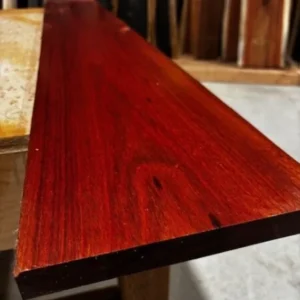
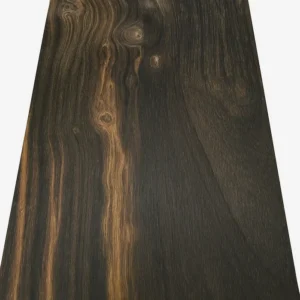
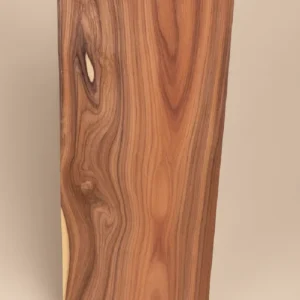
Purpleheart is prized for its unique coloration, making it a popular choice for decorative applications. The wood's density and hardness provide excellent durability, although it can be challenging to work with.